
Home › Coverages 12 Coverages Explained › Pollution Liability Insurance for Plumbers
Pollution liability for plumbers: sewage, mold and more
Contractor pollution liability insurance covers injury, property damage, defense and cleanup costs when your plumbing work releases or spreads sewage, mold, bacteria or another contaminant. Plumbers need it because many general liability policies exclude or narrow exactly those claims.
- Since 2003
- 12+ A-rated carriers
- 28 states
- Independent agents
Start your plumber insurance quote
Takes about a minute. A licensed agent follows up.
Licensed in 28 states · NPN 7642818 · Since 2003
What contractor pollution liability insurance does for a plumber
Contractor pollution liability (CPL) fills the holes that pollution exclusions, and often mold and bacteria exclusions, leave in a contractor's general liability. It typically pays for bodily injury, property damage, your defense, and cleanup and restoration costs when your work causes or spreads a contaminant.
For a plumber, "contaminant" is rarely a chemical drum. It's raw sewage from a lateral, a mold colony behind tile, or bacteria growing in a building's hot water system. Many carriers sell CPL together with contractors professional liability on one form.
Why the gap exists in the first place
Standard GL has a pollution exclusion, and its definition of "pollutants" includes "waste." The exclusion works in pieces. It removes pollution you bring to a job site, waste you haul or dispose of, and jobs whose purpose is cleaning up pollutants.
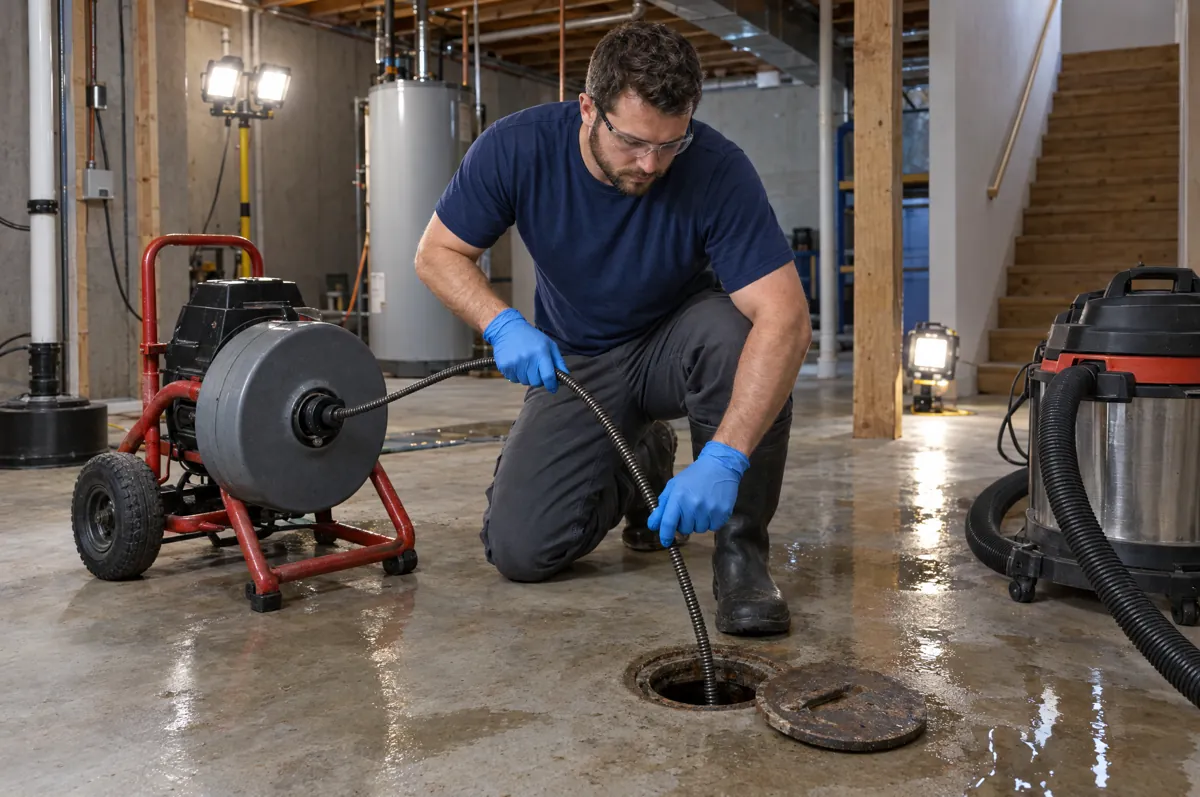
A sewage backup in a customer's basement doesn't fit neatly into any one of those pieces, and courts in different states read the wording differently. The bigger issue is the endorsements carriers add on top of the base form. Those are covered in the caveat below.
| What it covers | What it usually doesn't |
|---|---|
| Injury to people exposed to sewage or another contaminant your work released | The cost to redo the plumbing work itself |
| Damage to the building and contents from a release you caused | Septage spilled from your truck in transit, unless your auto policy is endorsed for it |
| Cleanup and restoration after a covered release | Injuries to your own employees (that's workers' comp) |
| Mold claims, when the form includes mold | Mold or Legionella, when the form doesn't name them |
| Bacteria and Legionella claims, when the form includes them | Claims reported after a claims-made policy ends with no tail |
| Your legal defense on a covered claim | Contamination from work done before a claims-made retroactive date |
Example scenarios
These are made-up illustrations, not real claims, and every outcome depends on the policy wording.
The restaurant main line
Example scenario: A tech opens a cleanout on a backed-up main at a busy restaurant. The line lets go, and sewage spreads across the kitchen floor and under the walk-in cooler. The health department closes the restaurant for three days while it's sanitized. The owner wants the cleanup bill, spoiled food and lost sales paid. If the shop's GL carries a total pollution exclusion, a CPL policy may be the only coverage that responds to the cleanup.
The senior living hot water system
Example scenario: A commercial shop installs new water heaters and a mixing valve in a senior living building. Months later, the facility finds Legionella in the hot water and two residents get sick. The families claim the system was set up wrong. A fungi or bacteria exclusion on the GL could leave that claim uncovered unless the plumber's pollution form clearly includes bacteria.
The hotel shower pans
Example scenario: A crew installs shower pans in a hotel renovation. One pan liner was nicked during tile prep, and water seeps into the wall for months. When the hotel opens the wall, mold has spread into two neighboring rooms. Removing the mold may fall outside GL, which is where a CPL form that names mold earns its keep.
Occurrence vs. claims-made, and what drives the price
Occurrence or claims-made: know which one you're buying
Pollution policies come both ways, so ask before you compare prices. An occurrence form answers for contamination that happened while it was active, no matter when the claim arrives. A claims-made form answers only for claims first made while it's active, and only for work done after its retroactive date.
With a claims-made pollution policy, two habits protect you. Keep the retro date the same at every renewal and every carrier change. And if you sell or close the shop, price the extended reporting period, often called tail, before you cancel, since sewage and mold claims can surface long after the work.
What moves the premium
We haven't found a reliable published median for plumbers' pollution coverage, so we won't quote one. Carriers look at:
- how much sewer, septic, drain and commercial water system work you do
- your revenue and claims history
- the limit and deductible you choose
- whether mold, bacteria and Legionella are included
- whether it's combined with professional liability
Your price depends on payroll, revenue, claims history, the work you do and the limits you choose. Get a quote for your plumbing business →
Which plumbers need pollution coverage most
- Drain, sewer and septic contractors. Sewage is the daily product of the work, and septic hauling brings the clearest exclusion of all. See insurance for drain and sewer contractors.
- Commercial plumbers in hospitals, hotels and senior living. Bigger hot water systems, vulnerable occupants and GC contracts that ask for pollution coverage. See commercial plumbing coverage.
- Shops answering GC paperwork. Some GC subcontract exhibits ask plumbing and other MEP trades to carry pollution coverage with mold included. Our certificate of insurance guide covers how to read those exhibits.
- Shops that offer sewage cleanup. When the purpose of a job is removing sewage or contaminated material, the GL exclusion for cleanup work can apply head-on.
Residential service plumbers with no sewer work often start without it. Add it when your work mix changes, not after the first backup.
Pollution coverage requirements by state
The plumbing license rules we track across our 28 states set general liability minimums, not pollution coverage. The push for CPL comes from contracts and from the kind of work a state's housing and sewer systems create. Three examples:
- Florida. The state estimates about 2.6 million septic systems serve roughly 30% of residents, so septic, lateral and sewer tie-in work is common. Florida plumber insurance
- New Jersey. Water systems must replace every lead service line by July 2031, and galvanized lines are treated as lead. That work disturbs old pipe and digs in the right-of-way. New Jersey plumber insurance
- Kentucky. Louisville and Lexington both operate under federal consent decrees over sewer overflows. Kentucky plumber insurance
For the rules where you work, start at our state pages. Get a quote for your plumbing business →
Related coverage
Pollution liability questions from plumbers
Does general liability cover a sewage backup I cause?
What does contractors pollution liability cover?
Is mold covered by contractor pollution liability?
Do residential plumbers need pollution insurance?
Is contractors pollution liability the same as environmental insurance?
Ready to see what you'd pay?
Independent agents, 12+ A-rated carriers, and a licensed agent back to you within one business day.