
Home › Coverages 12 Coverages Explained › Professional Liability Insurance for Plumbers
Professional liability (E&O) for plumbers
Professional liability insurance for plumbing contractors, also called contractors errors and omissions (E&O), covers claims that your design, advice, test report or inspection was wrong. General liability is built for physical damage from your work, and many contractor GL policies exclude professional services outright.
- Since 2003
- 12+ A-rated carriers
- 28 states
- Independent agents
Start your plumber insurance quote
Takes about a minute. A licensed agent follows up.
Licensed in 28 states · NPN 7642818 · Since 2003
What professional liability insurance for contractors means in plumbing
Professional liability covers claims that your professional judgment was wrong: a design, a specification, a report or a certification. General liability is built for bodily injury and property damage your work causes, so it isn't designed for a mistake on paper.
Many contractor GL policies go further and carry a professional services exclusion. That can leave a plumber with no coverage for a bad call made at a desk, even when the work in the field was perfect.
Plumbers cross into professional work more often than they think:
- sizing the domestic water system or water heaters on a design-build job
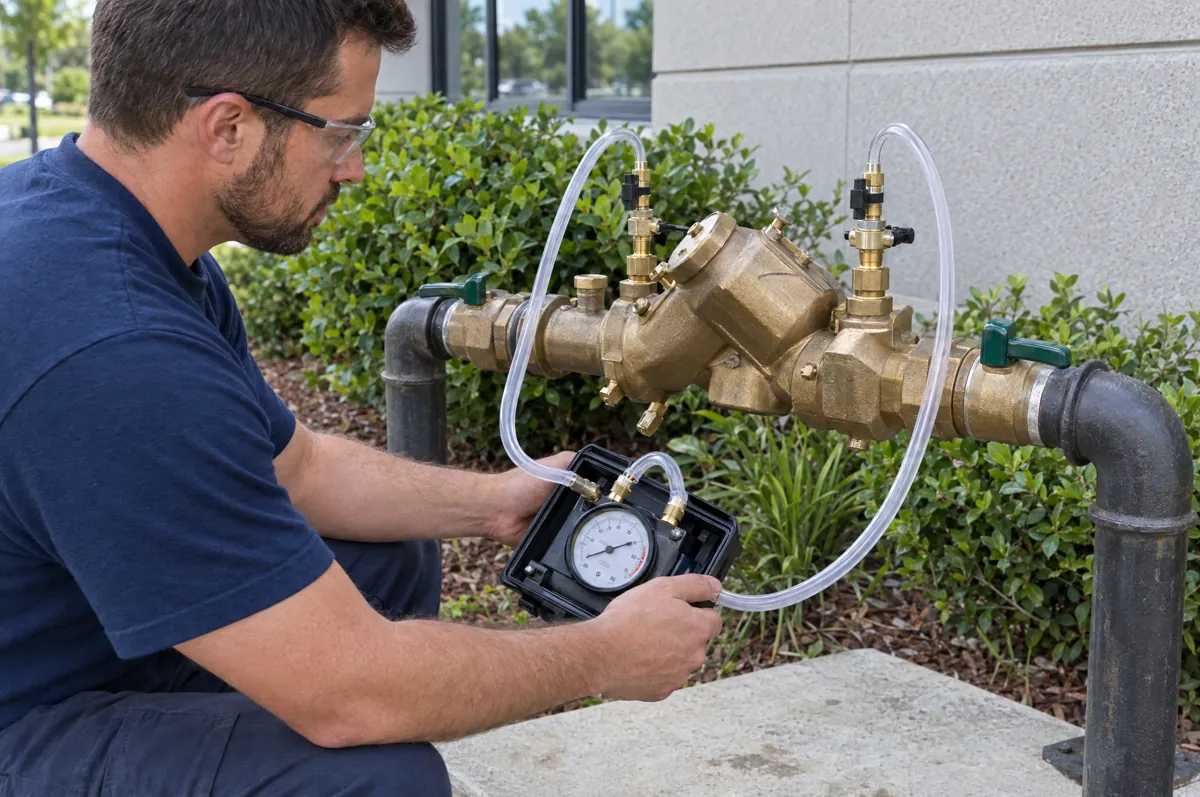
- signing a backflow assembly test report
- writing an inspection or sewer camera report that a buyer or property manager relies on
Carriers often sell contractors professional liability together with contractors pollution liability on one combined form.
Where the line falls between E&O and GL
The test is what went wrong. If a joint you made fails and floods a room, that's workmanship, and it's a general liability question. If the joint was perfect but the system you sized can't keep up, or the report you wrote missed a defect, that's a professional question. Some claims involve both, which is why plumbers who design and install usually carry both policies and review them together with one agent.
| What it covers | What it usually doesn't |
|---|---|
| Claims that a system you designed or sized was wrong | A leak from a joint you made (that's a GL question) |
| Errors in backflow test reports you sign | The cost to redo your own installation |
| Inspection and camera reports a client relied on | Injuries to your own employees |
| Specifications or advice that cost a client money | Mistakes made before the policy's retroactive date |
| Your defense on a covered claim | Claims first made after the policy ends, unless you bought tail |
| Design work on combined professional and pollution forms | Sewage or mold claims, unless the form also includes pollution |
Example scenarios
None of these are real claims. They show where a plumber's paperwork, not the pipe, becomes the problem.
The undersized water heaters
Example scenario: On a design-build job for a new taproom, a commercial shop sizes the water heaters. Opening week, the dishwashing line runs out of hot water at every rush, and the health inspector writes it up. Nothing leaked and nothing broke. The owner still wants the cost of a second heater, the rework and lost sales. With no physical damage, GL may not respond, and a professional services exclusion would make that clearer.
The backflow reports that didn't match
Example scenario: A shop tests backflow assemblies for a property manager's office parks every spring. The water utility audits the reports and finds two assemblies were listed with the wrong serial numbers and never actually tested. One of them had failed. The property manager pays for emergency testing and a replacement and sends the bill to the plumbing shop.
The camera report before closing
Example scenario: A home buyer hires a plumber to scope the sewer lateral before closing. The written report calls the line clear and misses an offset joint near the city tap. Two months after move-in, the lateral backs up and needs replacement. The buyer claims they relied on the report and wouldn't have bought the house without a price cut.
Claims-made coverage, limits and cost
Occurrence vs. claims-made, the short version
Your general liability is usually an occurrence policy, keyed to the date the damage happened. Most professional and E&O policies work differently. They're claims-made, keyed to the date someone brings the claim against you.
That timing shift brings two dates to watch:
- Retroactive date. The policy won't cover mistakes made before it. A report you signed in 2024 needs a retro date of 2024 or earlier. When you change carriers, carry the old retro date over instead of starting fresh.
- Tail, or extended reporting period. An optional, extra-cost add-on when a policy ends. It lets you report later claims for work done while the policy was active. It usually runs a limited time, often one year, and it doesn't give you a new limit.
| Coverage | What drives the price | Published figure |
|---|---|---|
| Professional liability, construction contractors including plumbers | Limits, deductible, the design or testing work you do, claims history | Median about $67 a month, roughly $808 a year (published industry data) |
Your price depends on payroll, revenue, claims history, the work you do and the limits you choose. A shop that stamps design-build drawings will price differently from one that signs a few dozen backflow forms a year. See our plumber insurance cost guide for every coverage side by side.
Which plumbers need E&O most
- Commercial and design-build plumbers. When the GC or owner relies on your sizing, layout or equipment selection, a design error is a professional claim. See insurance for commercial plumbing contractors.
- Backflow testers. Each signed test report is a professional statement that a device works.
- Shops selling inspections. Pre-purchase sewer scopes and written condition reports invite reliance claims. Drain and sewer shops often price this alongside pollution liability on a combined form. See drain and sewer contractor insurance.
A service plumber who only installs and repairs, and never signs a report, may get by on GL alone. Revisit it the first time a client asks you to design, certify or inspect.
This is a scale coverage. The jump from installing someone else's drawings to producing your own usually comes with bigger jobs, a GC or owner who expects you to stand behind the design, and a contract that names professional liability. Price it while you're preparing that first design-build bid, so the retro date starts before your first drawing goes out.
Professional liability and state rules
The license rules we track don't require plumbers to carry E&O. What states do regulate is the professional work that creates the exposure, especially backflow testing:
- Maryland. The journeyman-level plumber license includes 32 hours of backflow prevention testing training. Maryland plumber insurance
- Virginia. The state offers a backflow prevention device worker certification alongside its plumbing licenses. Virginia plumber insurance
- North Carolina. A Restricted Limited Plumbing Contractor license covers backflow preventers serving irrigation, among other exterior work. North Carolina plumber insurance
Contracts are the other driver. A design-build agreement or a property manager's testing contract may ask for professional liability by name. Our state pages cover each state's license rules, and your water utility may set its own rules for testers. Get a quote for your plumbing business →
Related coverage
Professional liability questions from plumbers
Do plumbers need professional liability insurance?
What's the difference between general liability and errors and omissions for contractors?
Does E&O cover a leak from my installation?
What is a retroactive date?
Does professional liability cover backflow testing?
Ready to see what you'd pay?
Independent agents, 12+ A-rated carriers, and a licensed agent back to you within one business day.